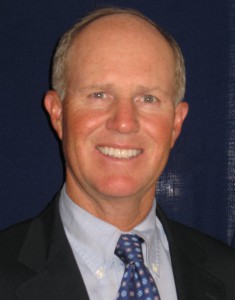
Michael Arrigo, an expert witness, and healthcare executive, brings four decades of experience in the software, financial services, and healthcare industries. In 2000, Mr. Arrigo founded No World Borders, a healthcare data, regulations, and economics firm with clients in the pharmaceutical, medical device, hospital, surgical center, physician group, diagnostic imaging, genetic testing, health I.T., and health insurance markets.
His expertise spans the federal health programs Medicare and Medicaid and private insurance. He advises Medicare Advantage Organizations that provide health insurance under Part C of the Medicare Act. Mr. Arrigo serves as an expert witness regarding medical coding and billing, fraud damages, and electronic health record software for the U.S. Department of Justice. He has valued well over $1 billion in medical billings in personal injury liens, malpractice, and insurance fraud cases.
The U.S. Court of Appeals considered Mr. Arrigo's opinion regarding loss amounts, vacating, and remanding sentencing in a fraud case. Mr. Arrigo provides expertise in the Medicare Secondary Payer Act, Medicare LCDs, anti-trust litigation, medical intellectual property and trade secrets, HIPAA privacy, health care electronic claim data Standards, physician compensation, Anti-Kickback Statute, Stark law, the Affordable Care Act, False Claims Act, and the ARRA HITECH Act.
Arrigo advises investors on merger and acquisition (M&A) diligence in the healthcare industry on transactions cumulatively valued at over $1 billion. Mr. Arrigo spent over ten years in Silicon Valley software firms in roles from Product Manager to CEO. He was product manager for a leading-edge database technology joint venture that became commercialized as Microsoft SQL Server, Vice President of Marketing for a software company when it grew from under $2 million in revenue to a $50 million acquisition by a company now merged into Cincom Systems, hired by private equity investors to serve as Vice President of Marketing for a secure email software company until its acquisition and multi $million investor exit by a company now merged into Axway Software S.A. (Euronext: AXW.PA), and CEO of one of the first cloud-based billing software companies, licensing its technology to Citrix Systems (NASDAQ: CTXS).
Later, before entering the healthcare industry, he joined Fortune 500 company Fidelity National Financial (NYSE: FNF) as a Vice President, overseeing eCommerce solutions for the mortgage banking industry. While serving as a Vice President at Fortune 500 company First American Financial (NYSE: FAF), he oversaw eCommerce and regulatory compliance technology initiatives for the top ten mortgage banks and led the Sarbanes Oxley Act Section 302 internal controls I.T. audit for the company, supporting Section 404 of the Sarbanes Oxley Act. Mr.
Arrigo earned his Bachelor of Science in Business Administration from the University of Southern California. Before that, he studied computer science, statistics, and economics at the University of California, Irvine. His post-graduate studies include biomedical ethics at Harvard Medical School, biomedical informatics at Stanford Medical School, blockchain and crypto-economics at the Massachusetts Institute of Technology, and training as a Certified Professional Medical Auditor (CPMA). Mr. Arrigo is qualified to serve as a director due to his experience in healthcare data, regulations, and economics, his leadership roles in software and financial services public companies, and his healthcare M&A diligence and public company regulatory experience.
Mr. Arrigo is quoted in The Wall Street Journal, Fortune Magazine, Kaiser Health News, Consumer Affairs, National Public Radio (NPR), NBC News Houston, USA Today / Milwaukee Journal Sentinel, Medical Economics, Capitol ForumThe Daily Beast, the Lund Report, Inside Higher Ed, New England Psychologist, and other press and media outlets. He authored a peer-reviewed article regarding clinical documentation quality to support accurate medical coding, billing, and good patient care, published by Healthcare Financial Management Association (HFMA) and published in Healthcare I.T. News.
Mr. Arrigo serves as a member of the board of directors of a publicly traded company in the healthcare and data analytics industry, where his duties include: member, audit committee; chair, compensation committee; member, special committee.